Need a Fence Anywhere in Lauderdale County? We've Got You Covered
Wherever you are in Lauderdale County, we can build your fence. Fortenberry Project Solutions runs out of Starkville and covers the whole county - the rolling clay-heavy hills of East-Central Mississippi, not delta ground and not Black Belt prairie. Most of the county sits on Sweatman fine sandy loam, which is loamy and workable on top but turns to firm silty clay by 6 to 18 inches down. On the steeper slopes, that matters for how deep and how wide we set your posts. If your place is down near the Sowashee Creek watershed in the Meridian metro, we also plan around the bottomland drainage before we start digging.
If you're inside Meridian city limits, your fence permit goes through the City of Meridian Building and Inspection Division. Out in the unincorporated county, it's the Lauderdale County Permit Office at 2525 14th Street, (601) 484-3992 - and we're happy to point you to the right one. Collinsville and Marion are the bedroom communities northeast of Meridian along US-45 and US-11, and we're out there often. Whether it's an in-town privacy fence, a commercial perimeter along US-11 or US-80, a farm and field fence out in the rural county, or a fence for a military family near NAS Meridian and Key Field, we've built it before.
One more thing worth knowing: the Lauderdale soil series - actually named for this county - shows up on hillslope positions with soft shale or claystone at 12 to 20 inches down. When we hit that resistance while augering, we widen the hole instead of forcing it deeper. And if your property sits in the floodplain corridor along Sowashee Creek, you're likely in FEMA Zone AE, which means a floodplain development permit before we can build - we'll flag that for you early so it doesn't catch you off guard.
Popular Fence Styles in Lauderdale County
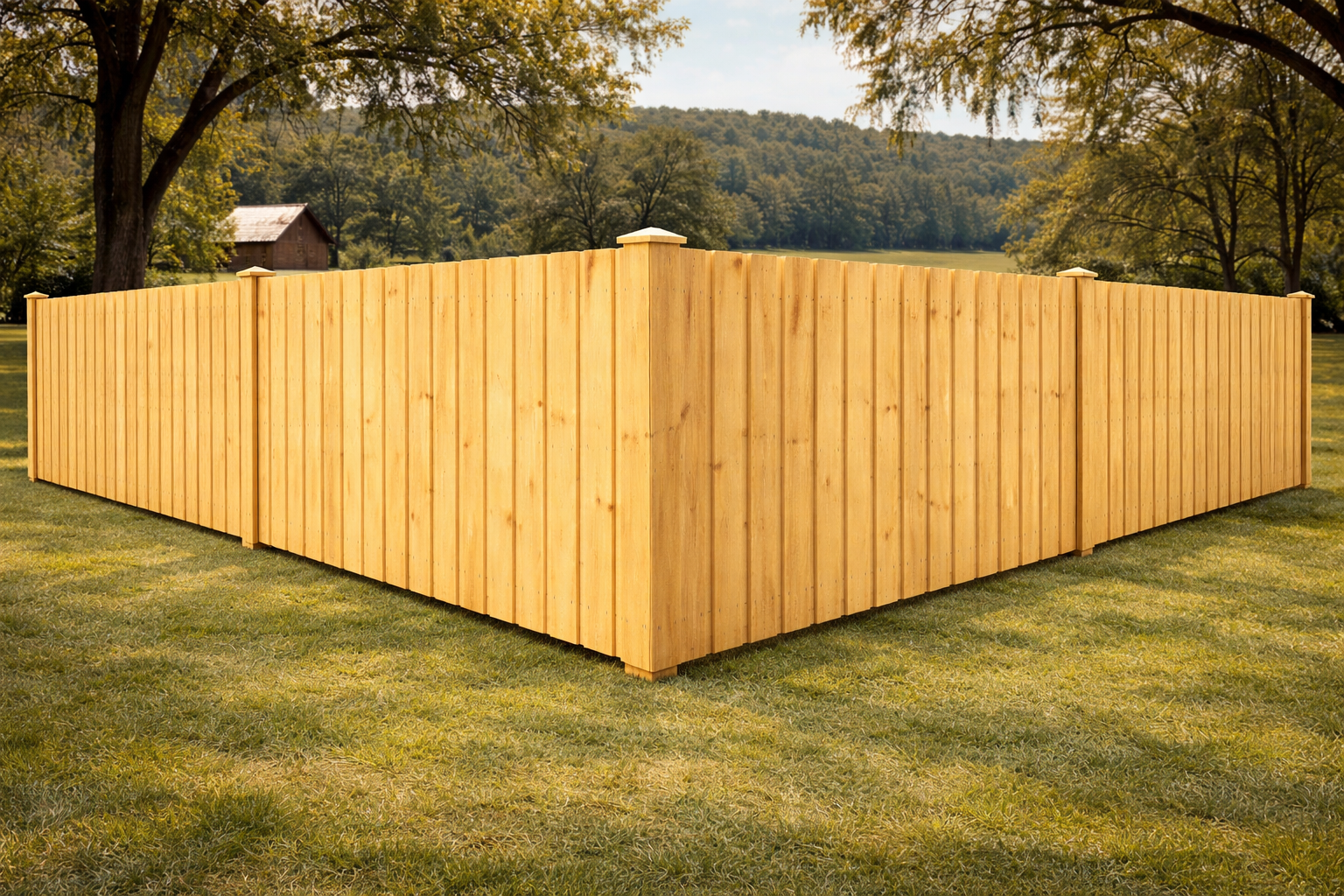
Board On Board
If you're in one of Meridian's established neighborhoods near Highland Park or on an older residential street where property lines sit close together, this is the one that gives you real backyard privacy - and the tree canopy on those lots only adds to it.
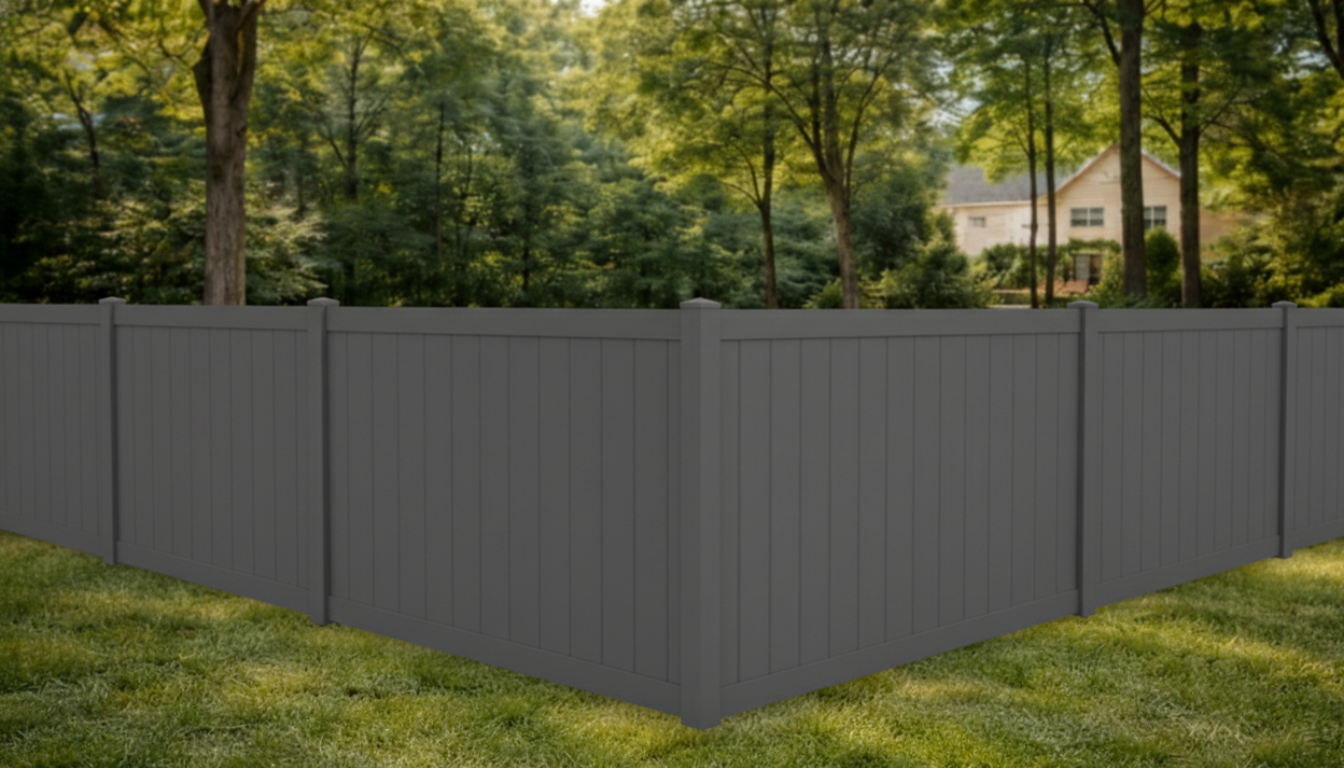
Full Privacy Vinyl
If you're a military family near NAS Meridian or Key Field, or you own a rental property in the area, vinyl is worth a look. It stays clean and uniform through a PCS move or a lease turnover without any upkeep on your end.
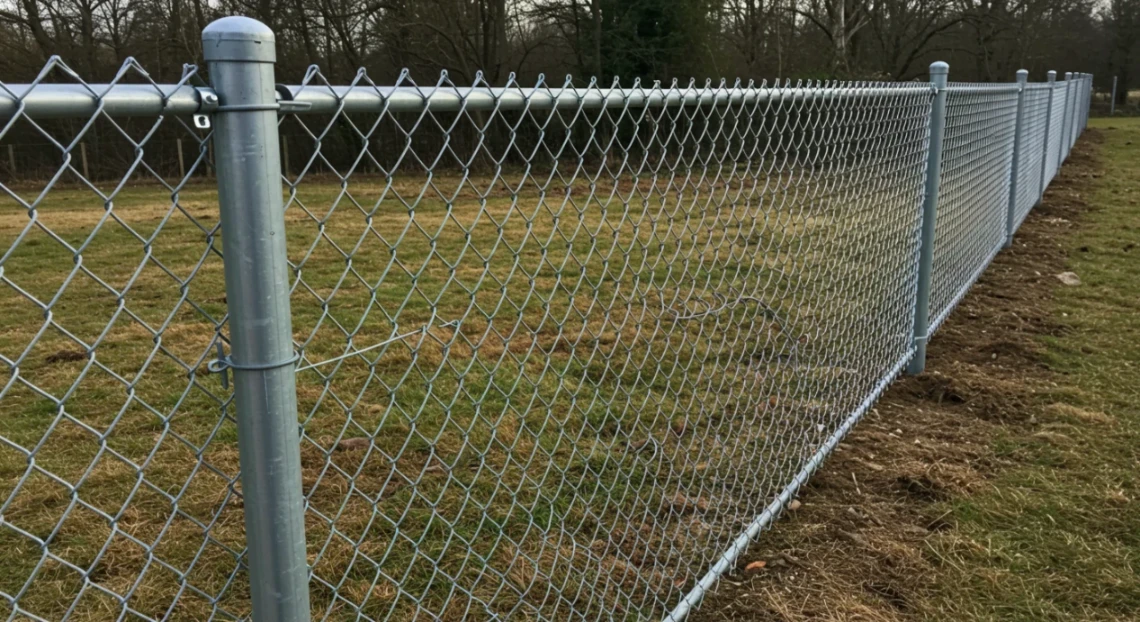
Commercial Chain Link
If you've got an industrial or logistics site along the US-11/US-80 corridor or near Meridian Regional Airport, chain link gives you a tough perimeter that holds up and handles heavy-duty gates for trucks and equipment.
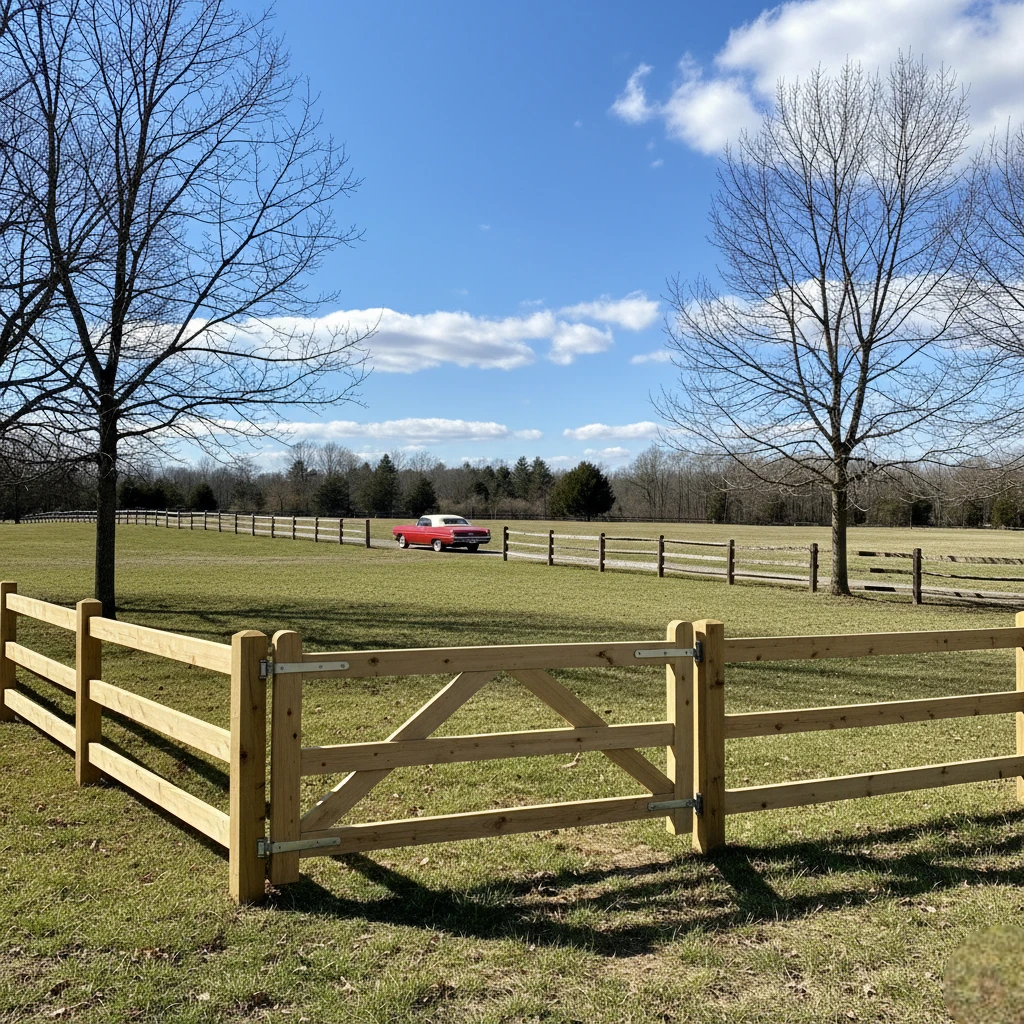
Farm and Field Fence
If you've got acreage out in the unincorporated county east or west of Meridian, woven wire and field fence with treated wood posts is what holds up on Sweatman hill-country ground for cattle and horses.
Why Your Posts Matter More Here Than You'd Think
Sweatman series soils cover more than 53,000 acres of Lauderdale County's uplands, so odds are it's what's under your yard. Here's what that means for you: the fine sandy loam on top is workable, but the firm silty clay subsoil at 6 to 37 inches down drains slow - that's hydrologic group C/D in soil terms, which just means water sits instead of moving through. After a hard rain, that water can pool right around your post bases, and that's how a fence starts to lean over time. So we pack gravel at the bottom of every hole and set corner and gate posts at least 36 inches deep. You won't deal with frost heave in this climate, at least. On the hillslope spots where the Lauderdale soil series shows up - the one actually named for this county - we can hit soft shale or claystone at 12 to 20 inches. When that happens, we widen the hole rather than force through it and crack the layer underneath.
A Few Things We Watch For Around Lauderdale County
- The Sweatman soil series covers more than 53,000 acres of the county's uplands, so we're almost always planning your post depth and drainage around it.
- Out on hillslope ground, the Lauderdale soil series (named for this county) can put shallow shale and claystone at 12 to 20 inches - we'll adjust our hole-digging approach if your lot has it.
- In Meridian, your permit goes through the Building and Inspection Division. Out in the unincorporated county, it's the Lauderdale County Permit Office at 2525 14th Street, (601) 484-3992 - we'll point you to the right one.
- Live in Briarwood Oaks in north Meridian? That subdivision has an active HOA with fence covenants, so we'll help you get ARC approval lined up before we apply for your permit.
- Near NAS Meridian, about 11 to 15 miles northeast of the city? We build a lot out there and around other major employers like Ochsner Rush Health and Anderson Regional Medical Center, so we know the area well.
- If your property is along Sowashee Creek or one of its seven named tributaries, you're likely in FEMA Zone AE, which means a floodplain development permit before we build - we'll check this for you so it doesn't stall your project.
- In one of Meridian's six Historic Preservation Districts? Exterior changes there can need extra review, so we'll tell you what's allowed before you settle on a style.
- If you're near Bonita Lakes Park (about 3,300 acres in city limits) or Lake Okatibbee (roughly 4,000 acres about 8 miles north of Meridian), we know that terrain too.
Who Handles the Permit?
You don't have to figure this out on your own. Inside Meridian, fence permits go through the City of Meridian Building and Inspection Division. Out in the unincorporated county, it's the Lauderdale County Permit Office, 2525 14th Street, (601) 484-3992. Tell us where you are and we'll point you to exactly what's needed.
Frequently Asked Questions About Fences in Lauderdale County, MS
Do I need a permit to build a fence in Meridian, MS?
Yes - inside city limits, the City of Meridian Building and Inspection Division issues fence permits. If you're outside city limits, it's the Lauderdale County Permit Office at 2525 14th Street, (601) 484-3992. Either way, we'll confirm your height limits, setback requirements, and any floodplain overlay rules before we start, especially if you're near Sowashee Creek or one of its tributaries.
What if my neighborhood has an HOA?
Then we start there. Briarwood Oaks in north Meridian, for example, has an active HOA with recorded covenants that require Architectural Review Committee approval before you apply for a city permit - do it out of order and you can end up redoing paperwork. Several of Meridian's six Historic Preservation Districts have their own review step too. Not sure if your subdivision has covenants? Send us your plat documents and we'll help you figure out what applies before we schedule anything.
Will my fence stay straight in Lauderdale County's clay soil?
It will if the posts are set right, and that's on us. Sweatman fine sandy loam is workable on the surface, but it turns to a firm silty clay subsoil around 6 to 18 inches down - that clay holds a post solid, but it drains slow, so water can pool at the base after heavy rain. That's usually why a fence starts leaning after a few years. We get ahead of it with gravel drainage beds at the base of every post and by setting corners and gates at least 36 inches deep. On the hillslopes where the Lauderdale soil series shows up, we widen the hole instead of forcing through the shale we hit around 12 to 20 inches.
Can you build near NAS Meridian or Key Field?
Absolutely - we work throughout the NAS Meridian and Key Field corridor northeast and southwest of Meridian. If you're in on-base housing like Juniper Ridge or Pine Crest, there are military housing covenants to build to - just send us the guidelines. Off base, it's the standard Lauderdale County permit and zoning process, and we handle it. For industrial and commercial sites near the airport, commercial chain link with heavy-duty gate hardware is usually the right call.
Do you build farm fences out in the county?
Yes - if you've got rural acreage anywhere in Lauderdale County's hill country, we can set you up with woven wire, high-tensile, or barbed wire field fence for cattle and horses. We work with the rolling topography out there, using treated posts that hold up in the acidic Sweatman soils and sizing corner bracing to match the slope grade on your property.