Need a Fence Anywhere in Webster County? We've Got You
Wherever you are in Webster County, if you need a fence built or repaired, we can be there. Fortenberry Project Solutions works out of Starkville and covers the whole county - from in-town lots near downtown Eupora and the Veterans Memorial Boulevard and MS-9 corridor, out to rural acreage along MS-15 around Mathiston and Mantee. Webster County sits across Mississippi's North Central Hills and Flatwoods transition, so with rolling ridges and creek bottoms fed by Big Black River tributaries, your fence line may cross mixed slopes and wetter low spots. That's why we don't sell a one-size plan - we come out, walk your ground, match the materials and post depth to your specific spot and jurisdiction, and give you a straight estimate.
We build for homeowners and landowners all over the county: in Eupora, that's in-town residential lots and light commercial along the MS-9 and Veterans Memorial Boulevard corridor; in Mathiston, small-lot fences and pasture runs along MS-15; and around Mantee, larger rural tracts and gate access off MS-46 and the county roads that connect to it.
Permits here depend on whether you're inside a city or not, and we'll sort that out for you. Inside Eupora, a fence is an accessory structure with a published $50 flat residential permit fee, handled through the city's Zoning and Building Administrator. If your parcel is in unincorporated Webster County - including communities around Walthall, Bellefontaine, and Tomnolen - the rules are less standardized online, so we'll confirm setbacks, right-of-way clearance, and anything else with the Webster County Chancery Office at the courthouse in Walthall before we start.
Popular Fence Styles in Webster County
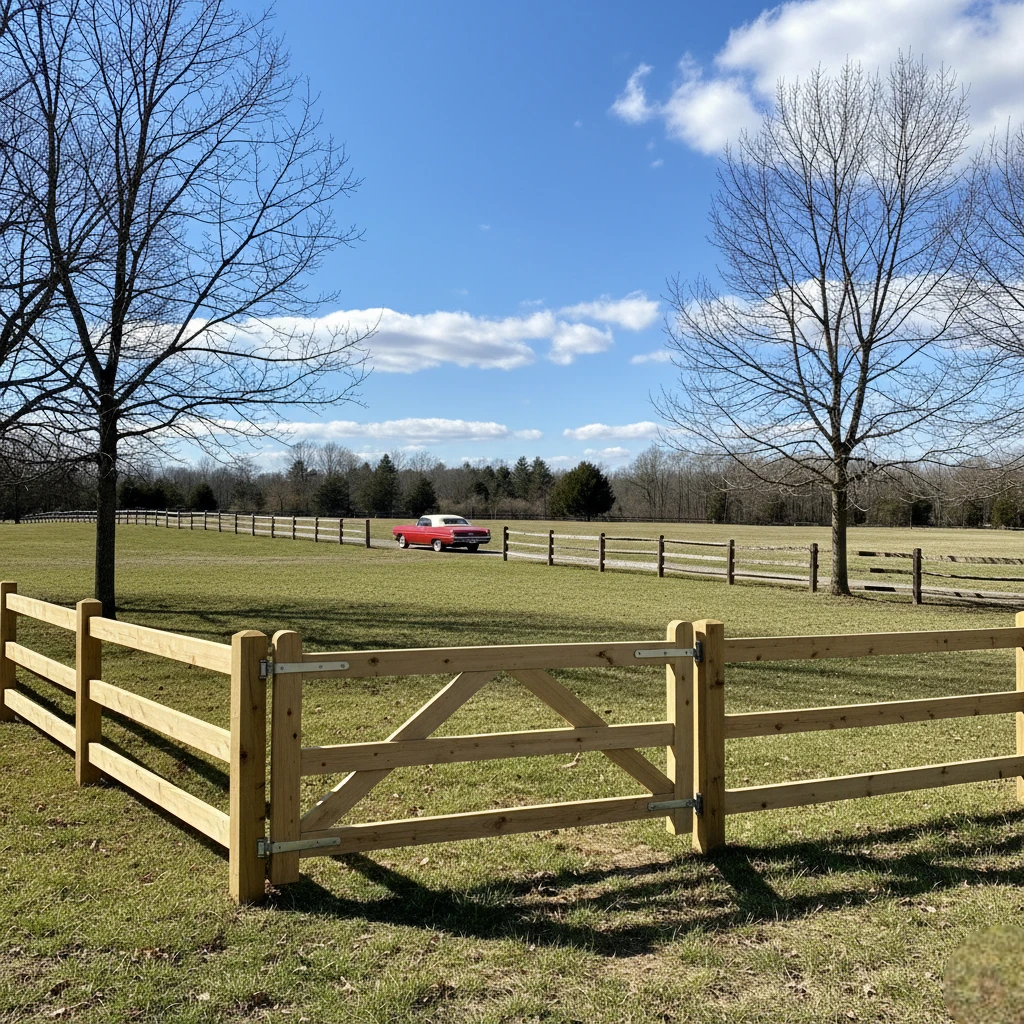
Field Fence
If you've got a rural tract on rolling ground, field fence is the workhorse for your boundary and general containment - it handles creek bottoms and timber edges in the North Central Hills part of the county without needing you out there constantly on repairs.
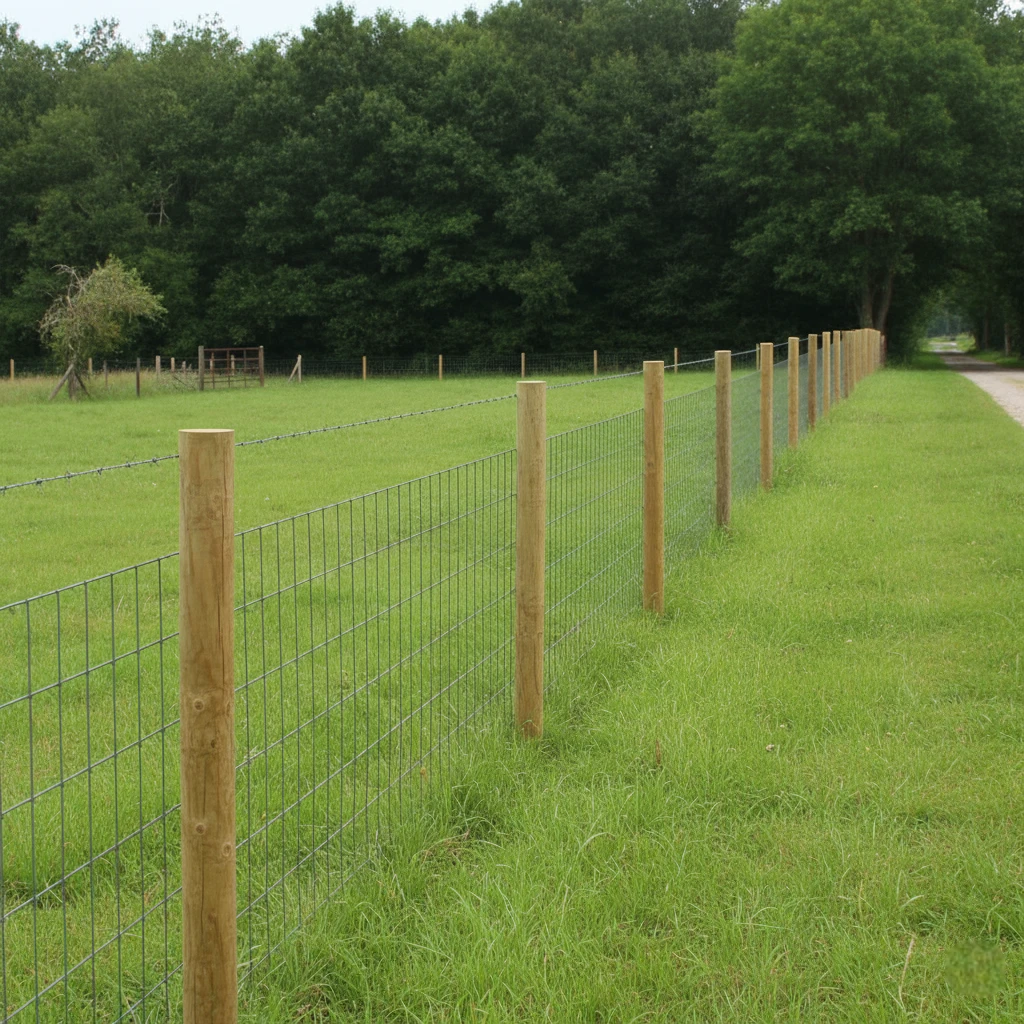
Pasture Fence
If you're running livestock or hay ground around Mathiston and Mantee, pasture fence carries the long runs across minor ridges and drainages - and with heavy-duty corner assemblies and proper tensioning, it's the difference between a fence that holds and one that sags on you within two seasons.
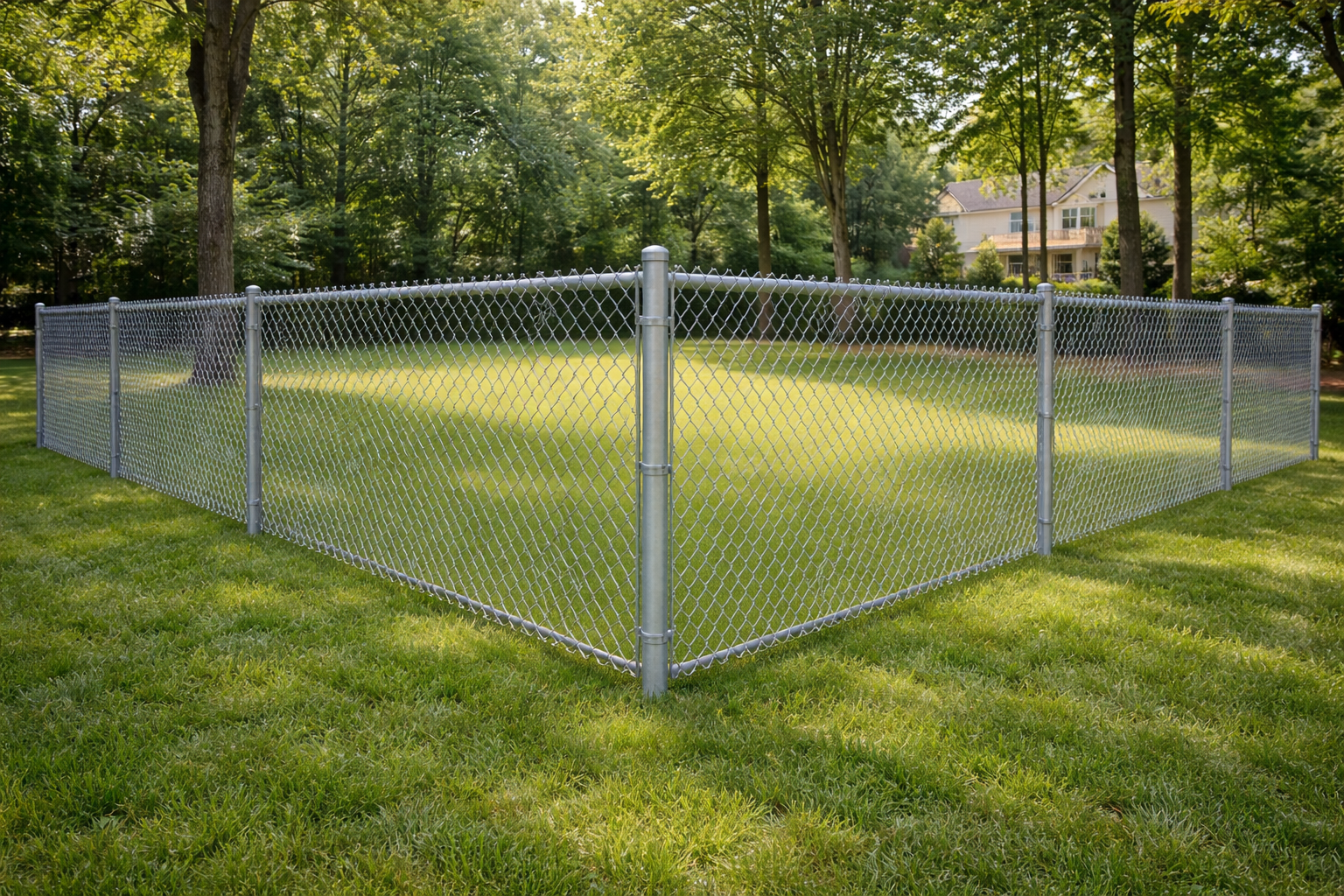
Galvanized Chain Link
If you're on an in-town lot in Eupora and want something straightforward to permit as an accessory structure, galvanized chain link gives you durable posts and gate hardware where keeping costs down and repairs easy is what matters most.
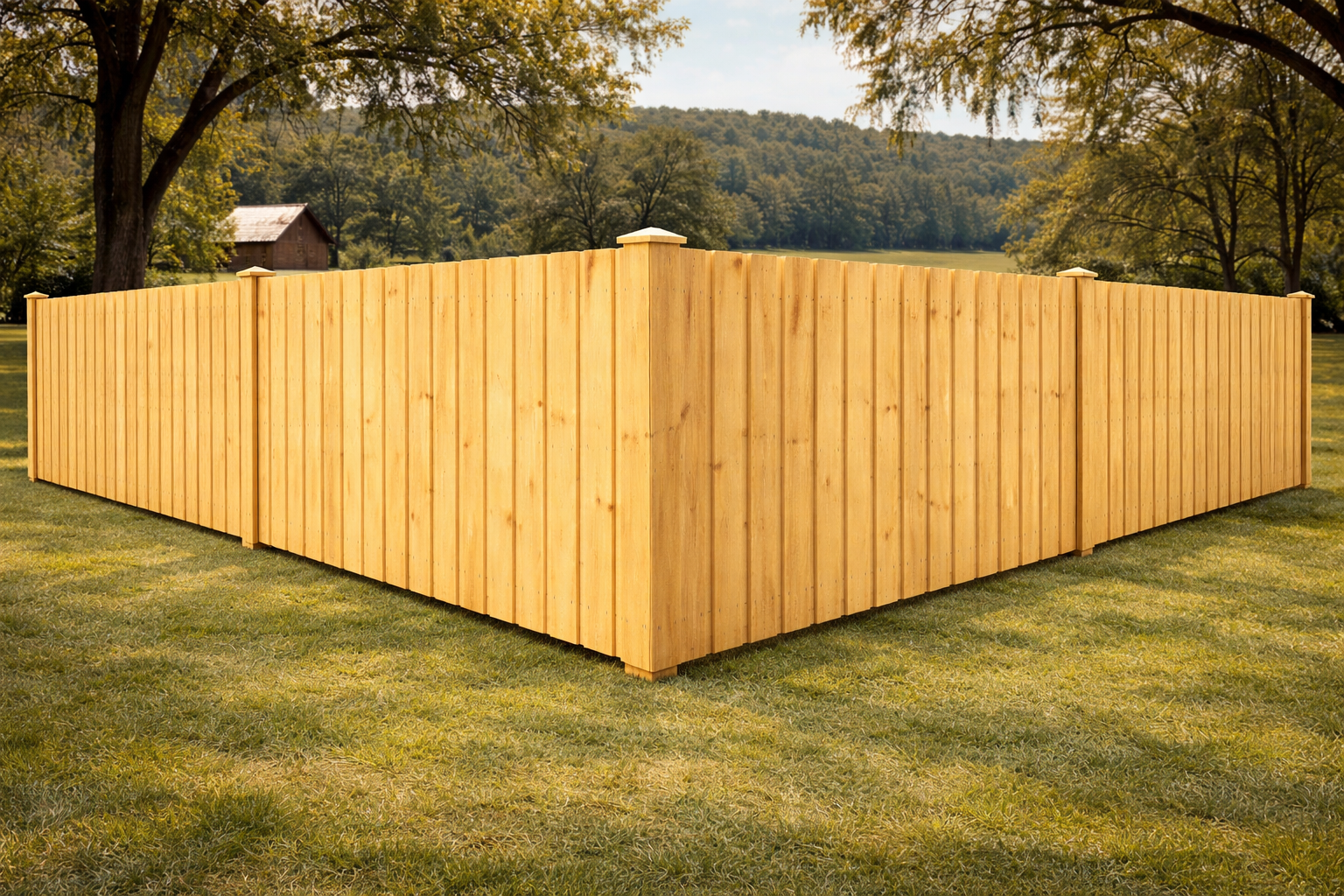
Board On Board
If you want real backyard privacy near Eupora's MS-9 corridor - screening a pool or patio - board-on-board is the one; it racks to the mild slopes common in Webster County's rolling terrain without leaving the gaps that flat-panel installs do.
Why Your Posts Matter More Here Than You'd Think
Webster County spans the Flatwoods-to-North Central Hills transition - flat to rolling in the east, more pronounced hills and valleys westward - so your fence line can go back and forth between stable uplands and wetter creek bottoms with flood-prone drainages. Here's what that means for you: the common soils here include Smithdale-Ora loamy and silty map units along with Providence and Tippah-type silt loams, plus occasionally flooded bottomland units, and that's exactly what decides whether we use a concrete collar or a drainage-conscious gravel set. On sloped runs we rack panels and stair-step where needed to keep the pickets tight to the grade, and we treat gate and corner posts as structural members - deeper and heavier - because that's where wind load and sag show up first. Near low crossings and wide creek flats, we plan for overflow and soft ground so your fence doesn't act like a debris dam or turn into a washout point when the water comes up. You won't see any of that, but it's the difference between a fence that stays straight and one that doesn't.
A Few Things We'll Handle for You Around Webster County
- Because the county straddles two provinces - the Flatwoods (east, low-rolling to flat) and the North Central Hills (west, hills and valleys) - with surface relief that can run 148 to 162 feet over a few miles and likely not less than 250 to 275 feet at its max, we match how we set posts to the ground you actually have.
- Your property's drainage matters: the northern part of the county drains into the Yalobusha River basin and the southern part into the Big Black River basin, and near tributaries like Spring Creek, Little Black Creek, Salt Creek, Calabrella Creek, Wolf Creek, Shutispear Creek, Sabougla Creek, and Lindsay Creek we plan for the fact that all county streams can flood, damage crops, destroy bridges, and carry away soil.
- Inside Eupora, we'll pull your permit as an accessory structure at the published $50 flat residential fee through the Zoning and Building Administrator - since city ordinance says nothing can be erected, moved, enlarged, or altered without that building permit.
- If you're in unincorporated Webster County, we'll confirm your setbacks and right-of-way with the Webster County Chancery Office at 6333 MS Hwy 9, Suite 123, Walthall, MS 39771 (662-258-4131) so nothing catches you off guard.
Who Handles the Permit?
You don't have to figure this part out on your own - and in Webster County it comes down to whether you're inside a city. If you're in Eupora, it's the City of Eupora Building Department / Zoning & Building Administrator - https://cityofeuporams.gov/building-department. For unincorporated Webster County parcels, it's the Webster County Chancery Office, 6333 MS Hwy 9, Ste 123, Walthall, MS 39771, (662) 258-4131 - http://www.webstercountyms.org/node/7. Tell us where your property is and we'll point you to exactly what's needed, or help you handle it.
Frequently Asked Questions About Fences in Webster County, MS
Do I need a permit to build a fence in Webster County, MS?
It depends on where your property sits, and we'll confirm it for you. Inside the City of Eupora, yes - a fence is an accessory structure with a published $50 flat residential permit fee, handled through the city's Zoning and Building Administrator. If you're in another incorporated town, the rules aren't always posted in one place online, so we'll check with your local town office. And for unincorporated Webster County parcels outside any city limits, we'll verify the setback, right-of-way, and any permit expectations with the Webster County Chancery Office at the courthouse in Walthall before we build - you don't have to chase that down yourself.
What if my property has an HOA or deed restrictions?
Most of Webster County is rural or small-town, so HOA-driven fence rules are less common here than in the big metro subdivisions - usually it's your property lines and the public right-of-way that shape the plan, not an architectural review board. In Eupora, if your property falls under city zoning, we'll line the fence plan up with the permit process and paperwork for you. And if you do have deed restrictions or a neighborhood association, just send us the written standards and we'll build to them - height, materials, gate orientation, all of it.
My property backs up to a creek bottom - will the fence wash out when it floods?
Not if we build it for the water. Webster County's streams feed both the Big Black and Yalobusha basins, and the bigger creeks have wide flats that can flood hard enough to damage structures and carry away soil. So on bottomland runs, we plan your post spacing and bracing so water passes through - especially on wire and field fence - instead of building a wall that catches debris, and we keep gates and tight solid panels out of the lowest swales. Where the soil maps as occasionally flooded, we use drainage-conscious post-setting so your posts aren't left sitting saturated after the water drops.
My ground west of Eupora rolls a lot - can you build a privacy fence without gaps at the bottom?
Yes, and that's exactly the terrain we plan for. Webster County's North Central Hills have rapid grade changes over short distances, and a straight-line panel install on those slopes leaves daylight under the fence if it isn't racked or stepped right. For board-on-board and other wood privacy styles, we rack the panels on moderate grades and stair-step them on the steeper transitions, so your fence tracks tight to the ground while the posts stay plumb and evenly spaced. We walk your whole line before layout to spot the grade breaks, so your gates and corners don't end up landing at a bind point.
I'm fencing acreage near Mathiston or Mantee - what works for long runs, and will the gates hold up?
For long rural runs, field fence and pasture fence handle uneven ground and creek crossings far better than solid panels while still clearly marking your boundary. As for gates holding up, it all comes down to the corner and hinge-post build: we size and set your gate posts as structural members so the gate doesn't start sagging over time, especially in the loamy and silty soils that soften when wet. And if your entrance ties into a state highway or county road, we'll confirm the gate placement so the swing and approach don't encroach on the public right-of-way.