Starkville, Oktibbeha County, and the Golden Triangle
Fortenberry Project Solutions

Farm Fence in Starkville and the Golden Triangle

Farm, pasture, livestock, and high-tensile fence installation for rural Mississippi properties. Serving Oktibbeha, Clay, and Noxubee counties. Call 601-562-2540.

Ready to Build Your Fence?

Farm Fence in Starkville and the Golden Triangle

Farm and pasture fencing in northeast Mississippi has to hold against cattle pressure, deer intrusion near the Noxubee National Wildlife Refuge, equipment contact, and the terrain changes common to rolling Oktibbeha, Clay, and Noxubee county acreage. Fortenberry Project Solutions installs high-tensile wire, barbed wire, field fence, woven livestock wire, and post-and-rail for rural properties ranging from small hobby farms to multi-hundred-acre boundary runs - sizing the wire gauge, post spacing, and brace configuration to match the actual use and terrain of each site. On clay-heavy soils west of Starkville toward MS Highway 12, corner braces and H-brace assemblies are set deep to resist the lateral pull of high-tensile wire under Mississippi's wet-season soil conditions.

  • High-tensile, barbed wire, woven livestock wire, and field fence options
  • Brace systems and post spacing sized for actual livestock pressure and terrain
  • Long rural runs across Oktibbeha, Clay, Noxubee, Choctaw, and Webster counties

Properties near the Noxubee National Wildlife Refuge in Noxubee County face significant deer pressure that can overwhelm standard field fence - FPS recommends woven wire with a barbed-wire top strand or high-tensile electric configurations for those perimeter runs.

Farm Fence

Farm Fence and Rural Options

Rural Mississippi properties often need a combination of field fence, woven livestock wire, barbed wire, and gate systems sized for equipment access. FPS matches the fence type to the animal, acreage, and terrain.
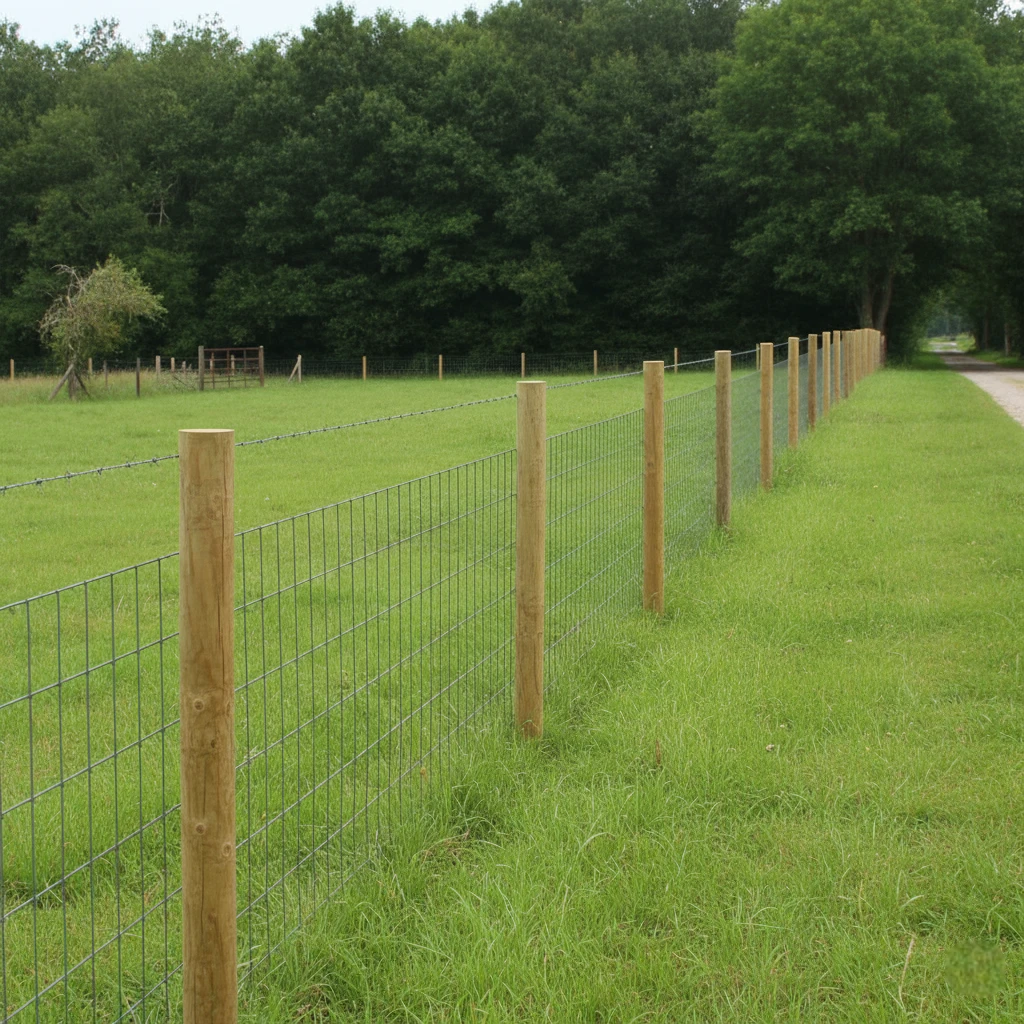
Field fence securing farmland boundaries on rural property in Lowndes County, Mississippi

Field Fence

Pasture fence solution with woven wire and wooden posts on a rural Mississippi farm

Pasture Fence

Livestock fence installation with wire panels and corner bracing on a Mississippi cattle farm

Livestock Fence

Woven wire fence along an agricultural property boundary in the Golden Triangle, Mississippi

Wire Fence

Ranch fence enclosing a cattle pasture with wire and treated wooden posts in Mississippi

Ranch Fence

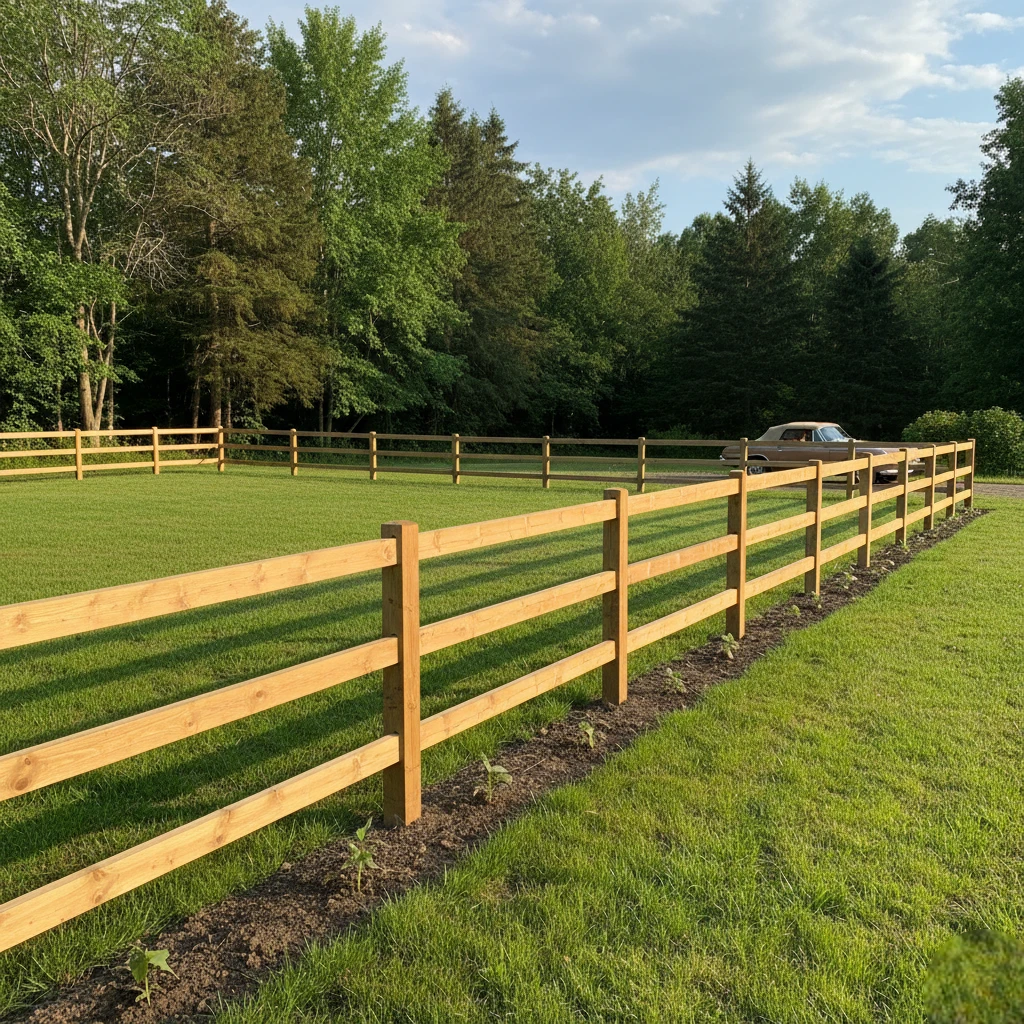
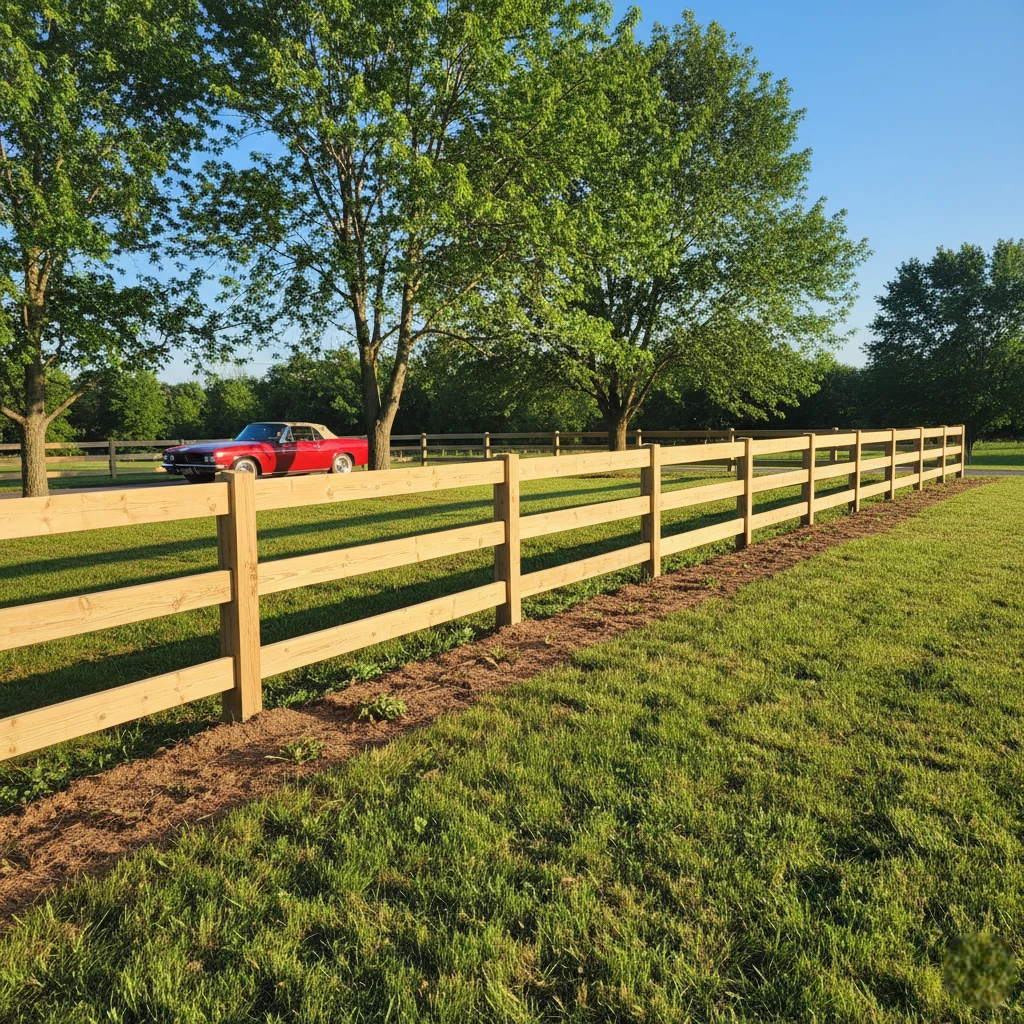
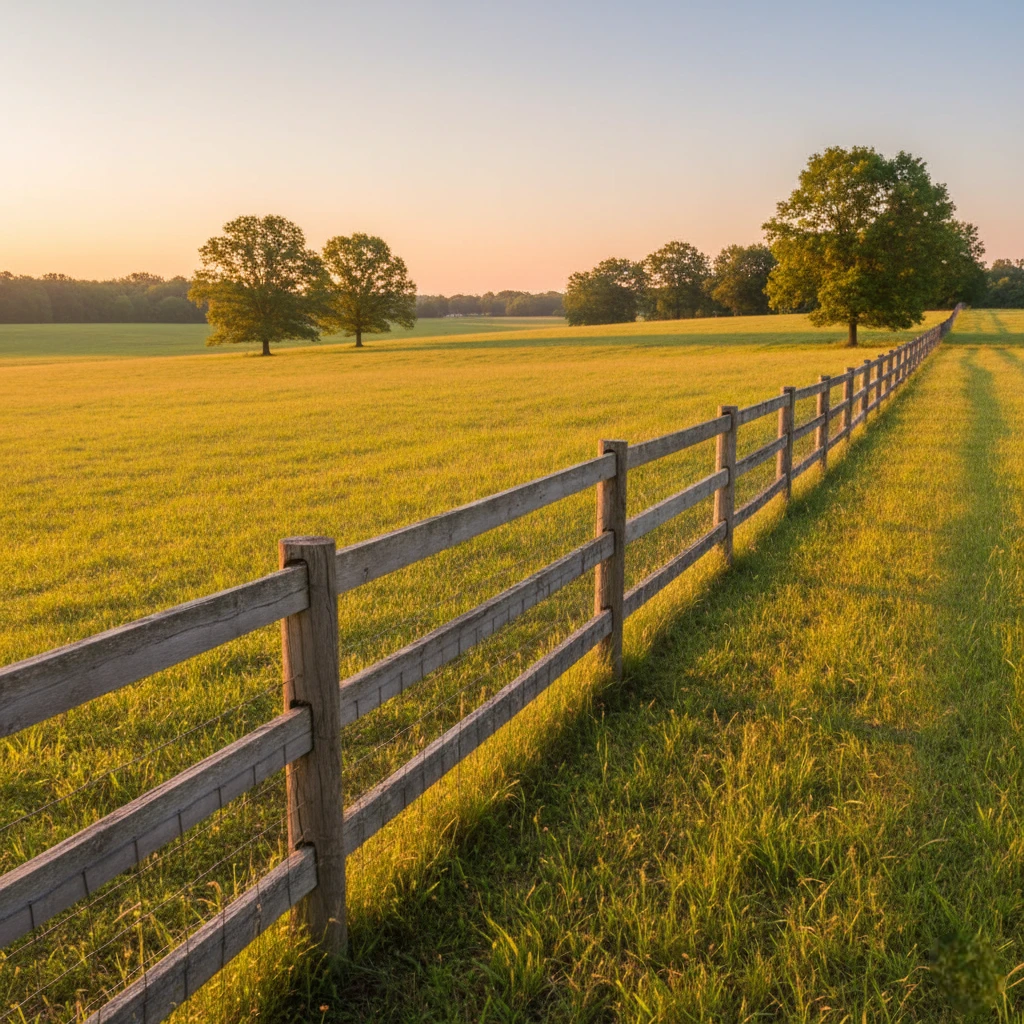
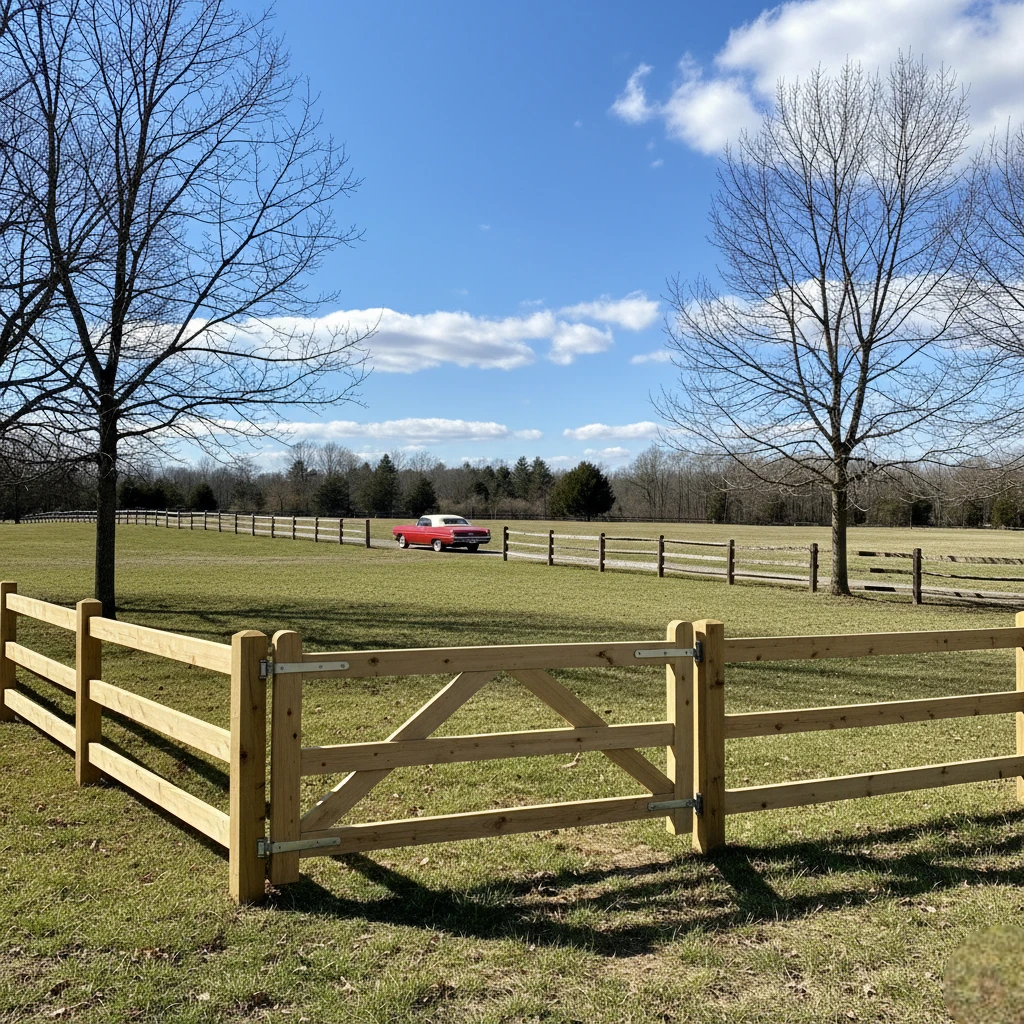
Post-and-rail fence on rural acreage - farm fence installation in the Golden Triangle, Mississippi

Post and Rail

Planning Your Farm Fence

The variables that matter most for farm fence - post spacing, wire type, brace assembly design, gate width, and terrain management - are different from residential fence planning and require field-level judgment for each property.

Agricultural fence spanning a large rural parcel in Clay County, Mississippi

Livestock and Field Layouts

Cattle require at minimum 4-strand barbed wire or 4-foot woven livestock wire with a barbed top strand; a 1,000-pound cow leaning into undersized wire will work it loose within a season. High-tensile wire - typically 12.5-gauge, 5 to 7 strands - covers long runs on rolling Oktibbeha and Clay county terrain more economically than woven wire and is the preferred choice for property-line boundary fencing where livestock containment is the goal but cattle pressure on the wire is moderate. Post spacing for high-tensile runs is typically 20–30 feet on line posts with H-brace assemblies at corners, gate openings, and changes of direction. Gate placement accounts for trailer access (minimum 14 feet for a gooseneck trailer), equipment drive lanes, water access points, and feed movement across the property.

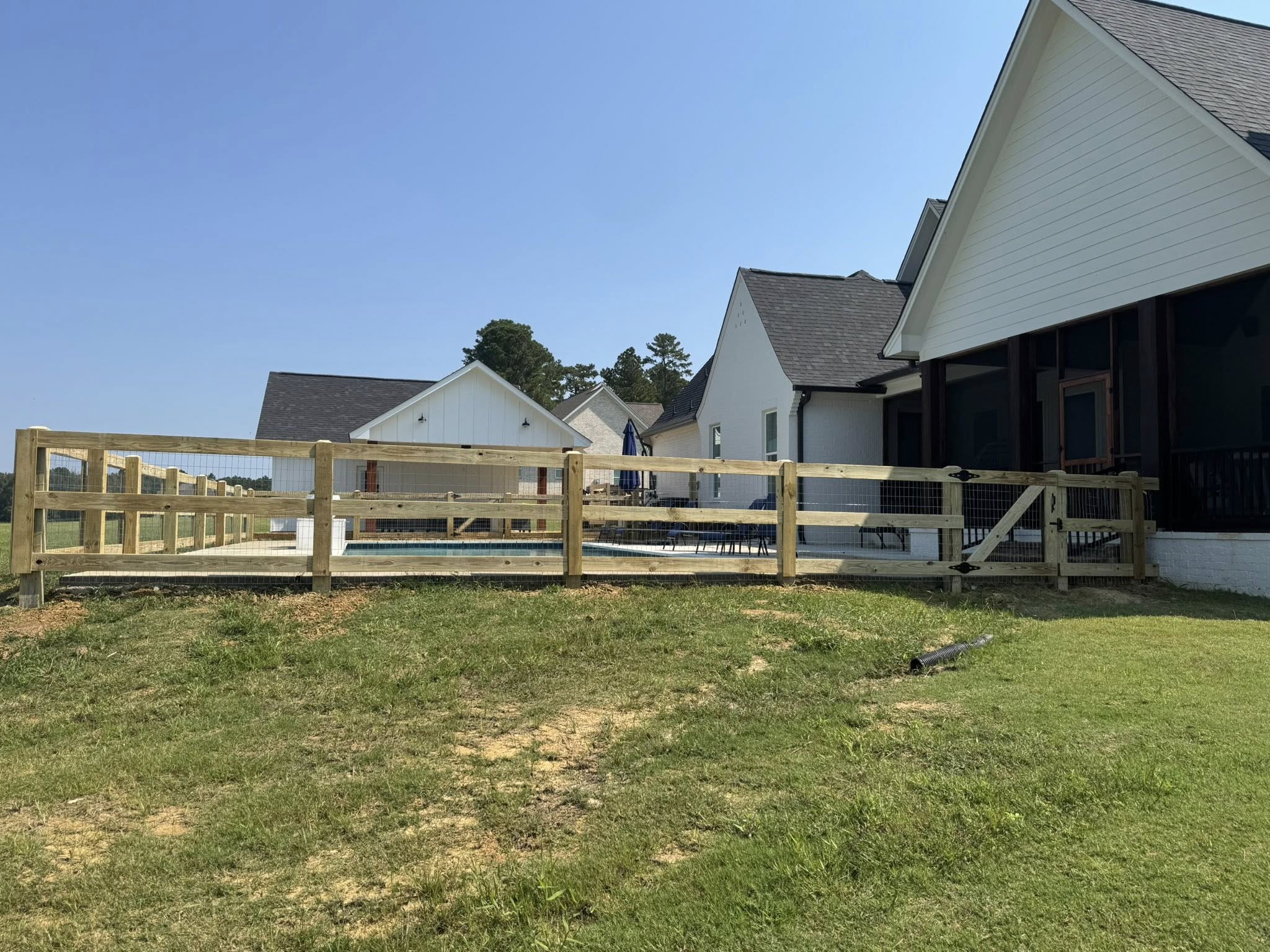
Custom farm fence project with drive gate and wire panels on a Mississippi property

Rural Gate Planning

Farm gates on clay-soil properties in Oktibbeha and Noxubee counties require gate posts set 48 inches or deeper in concrete, because the combination of gate weight, vehicle contact, and shrink-swell clay movement will heave a shallowly-set post within two seasons. Steel pipe posts (2-3/8-inch or 2-7/8-inch OD) outperform wood gate posts for farm applications because they resist twist under livestock pressure. Drive gate widths of 14–16 feet accommodate large tractors and gooseneck trailers; a 10-foot gate clears most ATVs and pickup trucks. Walk gates at 4–5 feet are standard for pasture access without vehicle movement.

Features and benefits

Farm Fence Built for Mississippi Acreage

The right farm fence system balances wire strength, post depth, brace design, and gate configuration against the actual livestock pressure and terrain of the specific property.

Post-and-rail fence on rural acreage - farm fence installation in the Golden Triangle, Mississippi

Covers Long Runs Efficiently

High-tensile wire and barbed wire are designed for acreage-scale runs where the economics of residential fencing do not apply. A properly tensioned 5-strand high-tensile fence on 20-foot post spacing covers a quarter-mile run at a fraction of the cost of woven wire, making it the practical choice for outer boundary lines on Oktibbeha, Clay, and Noxubee county farms.

Matched to Livestock and Terrain

Cattle, horses, hogs, and goats each require different wire heights, strand counts, and mesh openings. Rolling Oktibbeha County terrain demands corner braces set deep enough to hold high-tensile tension through frost heave and wet-season clay movement. FPS selects wire type, post depth, and brace configuration based on the animal species, field size, and site-specific ground conditions.

Repairable in Sections

When a tractor clips a wire run, deer tear through a field fence section, or a flood event in Tombigbee bottomland deposits debris against a wire line, the damaged section can be re-tensioned or re-strung without disturbing the brace assemblies. That sectionable repairability keeps repair costs manageable across large acreage properties where a full fence replacement is not practical.

Farm Fence Service Areas We Cover

Fortenberry Project Solutions installs farm, pasture, and livestock fencing across Oktibbeha, Lowndes, Clay, Winston, Noxubee, Choctaw, and Webster counties - covering rural acreage from Starkville and Mississippi State west to Ackerman and Eupora, south to Macon and Louisville, and east to Columbus and West Point along US Highway 45. We serve properties of all sizes, from 5-acre hobby farms to multi-hundred-acre cattle operations.

Local Fence Knowledge

On rolling Oktibbeha County acreage west of Starkville along MS Highway 12, high-tensile wire runs require H-brace assemblies with 8-foot brace posts set 48 inches deep in concrete, because the combination of tensioned wire load and Black Belt clay movement will pull a shallow brace post out of alignment within two to three seasons. In Noxubee County near the Noxubee National Wildlife Refuge - one of the most deer-dense areas in Mississippi - FPS recommends running a woven-wire lower section (typically 47-inch sheep-and-goat wire or livestock fence) with a two-strand barbed-wire topping, because high whitetail populations push standard 4-strand barbed wire through fence runs during the November–January rut and winter congregation period. Clay County pasture fencing near West Point along the US Highway 45 corridor typically uses 12.5-gauge, 5-strand high-tensile for outer boundary lines and woven livestock wire for cross-fencing that divides rotational grazing paddocks. In Tombigbee River bottomland soils in western Lowndes County, steel pipe posts are specified instead of wood for farm fence to avoid the accelerated rot that affects even UC4B-treated wood posts in soils that hold standing water for weeks at a time during Mississippi's wet season.

Frequently Asked Questions

How much does farm fence installation cost in Mississippi?

Farm fence installation in northeast Mississippi typically ranges from $1.50 to $4.50 per linear foot for wire fence material and installation depending on wire type - barbed wire is at the low end, woven livestock wire and high-tensile in the middle, and heavy-gauge cattle panels at the upper end. A one-mile barbed wire fence (5 strands) runs roughly $2,500–$5,000 installed; a comparable woven wire run with a barbed top strand runs $5,000–$9,000. Gate posts, H-brace assemblies, and number of gates are the variables that most affect the per-acre total. A free on-site estimate gives you a property-specific number.

Do I need a permit to build a farm fence in Oktibbeha or Noxubee County?

Farm and agricultural fencing on rural, unincorporated land in Oktibbeha, Noxubee, Clay, and Webster counties generally does not require a building permit. Property line fences do not typically require permits in Mississippi's rural counties, but if your fence line is near a road right-of-way, a MDOT-maintained highway, or navigable waterway, setback and right-of-way rules apply. FPS recommends confirming with the county permit office before running fence along a highway or near a creek or river boundary.

How long does farm fence last in Mississippi's climate?

Galvanized high-tensile wire fence in Mississippi typically lasts 20–30 years when properly tensioned and maintained. Barbed wire on quality galvanized steel lasts 15–25 years depending on humidity exposure and whether the fence stays properly tensioned. Woven livestock wire lasts 15–20 years. The biggest longevity factors in northeast Mississippi are post rot in Black Belt clay, wire corrosion near bottomland waterways, and deer pressure that stresses wire between posts. Treated wood posts last 15–20 years; steel pipe posts outlast the wire itself in most applications.

What type of fence works best for cattle on rolling Mississippi acreage?

For cattle containment on rolling Oktibbeha and Clay county acreage, 4-strand barbed wire or 12.5-gauge high-tensile wire with 5–7 strands and H-brace assemblies at every corner and change of direction is the standard recommendation. High-tensile wire covers large acreage runs most economically and handles slope changes well; barbed wire is lower-cost and faster to repair. For properties near the Noxubee National Wildlife Refuge where deer pressure is high, a woven-wire lower section with a barbed top strand provides better resistance to deer pushing under or through the fence at night.

Can I finance a large farm fence project through Fortenberry Project Solutions?

Yes - FPS offers financing through Acorn Finance, which is particularly well-suited for large farm fence projects where installation costs can reach $10,000–$50,000 or more depending on acreage. Pre-qualify in 60 seconds with a soft credit check that does not affect your score. Loan amounts go up to $100,000 with terms up to 20 years and rates starting at 6.99% APR, making it possible to budget a multi-mile boundary fence or livestock enclosure installation without depleting working capital.

Related Fence Services

Farm fence projects often include commercial or residential perimeter fencing near the main structure, gate systems for equipment access, and fence repair for existing rural fence lines - these services are common additions to a farm fence installation.

Board-on-board wood privacy fence installation in Starkville, Mississippi by Fortenberry Project Solutions

Fence Installation

Complete fence installation for homes, farms, commercial sites, and rental properties across the Golden Triangle.

Custom wood privacy fence with cap and trim detail - Oktibbeha County, MS fence contractor

Wood Privacy Fence

Custom wood privacy fencing for backyards, rental homes, property lines, and neighborhood lots.

Galvanized chain link fence installation for residential property in Oktibbeha County, Mississippi

Chain Link Fence

Affordable chain link fencing for homes, businesses, sports areas, storage yards, and acreage.

Ready for a fence estimate?

Call 601-562-2540 or send the project details and FPS will follow up.